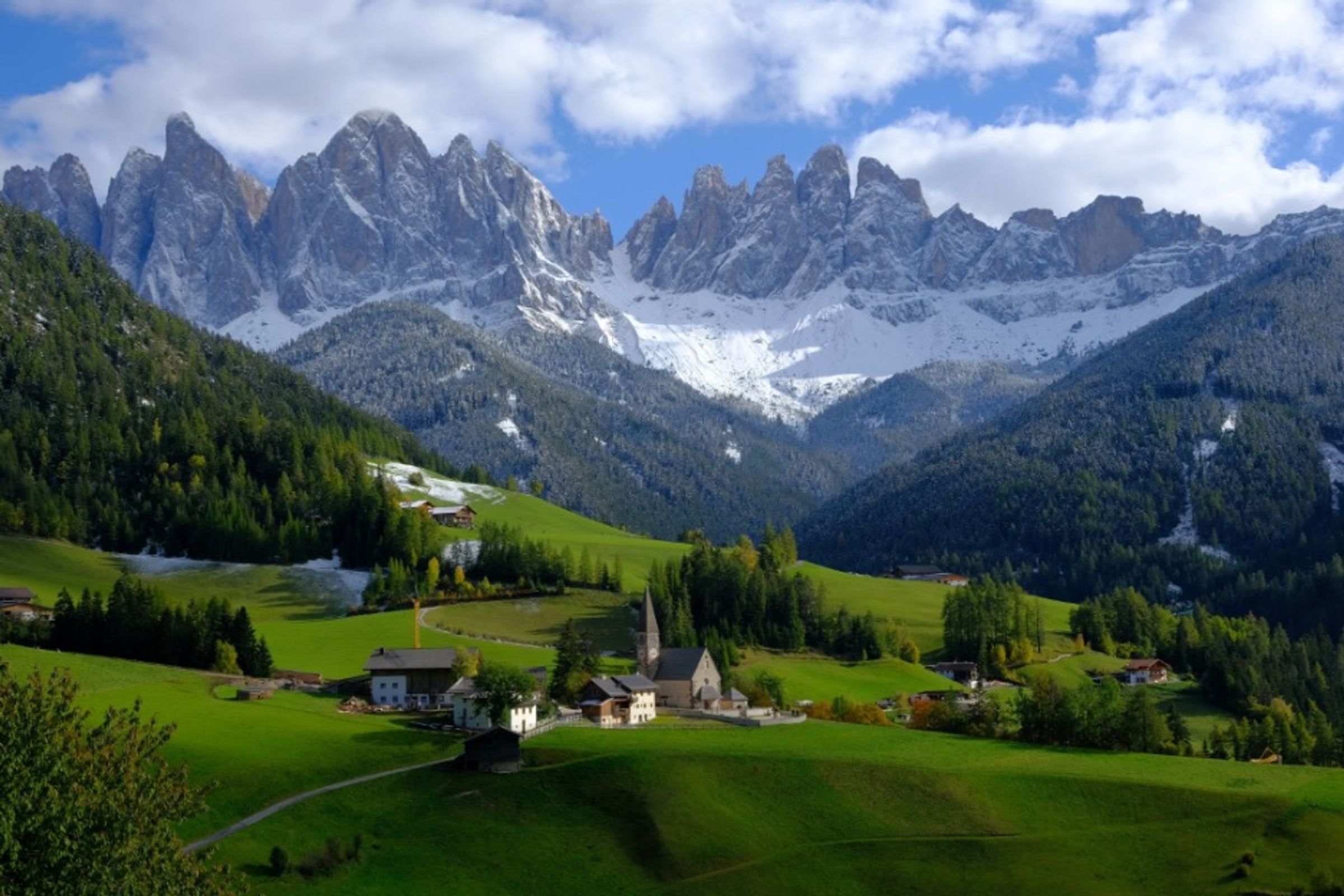
Somewhere between “I need to log off” and “I need a passport stamp,” social media found the Dolomites.
Scroll through TikTok and Instagram and the destination appears repeatedly: jagged limestone peaks, electric blue alpine lakes, wooden mountain huts, and captions like “Work hard. Not for the lambo. But for Tuesdays to look like this.”
The appeal isn’t simply the scenery. For a generation accustomed to constant notifications and productivity, the Dolomites have become shorthand for something harder to find: the aspiration to disappear.
From ‘Touch Grass’ to Take a Hike
The internet phrase "touch grass” has become a shorthand for stepping away from screens and stress to reconnect with the physical world. Across TikTok and Instagram, the phrase often accompanies videos of people hiking, lying in the grass, or running through fields, reflecting a cultural desire to disconnect from constant online engagement. The phrase illustrates a broader shift in how younger people are thinking about leisure, placing greater value on experiences that feel present rather than productive.
Rather than chasing packed itineraries or shopping, many travelers are redefining what makes a vacation feel worthwhile. Increasingly, a quality trip lies in having the time and space to slow down. Hilton’s 2025 Trends Report identifies “slow travel” – spending more time immersed in a destination rather than rushing between attractions – as one of the industry’s defining travel trends. Nearly one in four leisure travelers plan to embrace longer, more immersive trips while 74% want recommendations from locals.
In an online culture that often rewards constant productivity, the ability to disconnect has become aspirational in itself. The Dolomites fit naturally into that movement. Unlike city itineraries built around museums, cafés, or shopping districts, an image from the Dolomites can capture alpine meadows, dramatic limestone peaks, and wooden huts all at once. The scenery lends itself naturally to the idea of slowing down, making the Dolomites as emotionally resonant online as they are visually striking.
The Appeal of Hut-to-Hut Hiking
A defining feature of visiting the Dolomites is hut-to-hut trekking between mountain trails and alpine lodges, called rifugios. Rather than returning to a hotel each night, hikers spend several days walking between rifugi, where they can reserve a bed, share communal dinners, and set out again the following morning. Routes range from beginner-friendly day sections to multi-day treks like the Alta Via 1, which stretches roughly 75 miles through the mountains.
Unlike hotels, rifugi were originally built as mountain refuges for climbers and hikers, with many operating as family-run lodges that serve communal meals and simple overnight accommodations. Most rifugi are spread 4-6 hours of hiking apart on popular trails like the Alta Via 1.
Planning a hut-to-hut trek requires substantial preparation. Because many rifugi operate independently, hikers often reserve each hut separately months in advance while accounting for trail distances, weather, and limited services along the route.
Once on the trail, however, much of the decision-making disappears. With beds reserved ahead of time and hearty dinners served at the huts, there is little left to organize once the day’s hike is finished. Evenings are often spent chatting with other hikers while watching the sun disappear behind the peaks.
The Luxury of a Three-Euro Pastry
The most memorable moments aren’t extravagant. One creator’s video that got over 2.4 million likes on Instagram shows a line of krapfen donuts getting powdered against a grassy alpine backdrop (SOURCE). Another short video’s caption reads “There is something so peaceful about these traditional wooden huts surrounded by giant mountains.” (SOURCE) The appeal of these videos lies in the ordinariness. A pastry that costs only a few euros becomes memorable and sought-after not because it’s exceptional on its own but because of the setting and the pace at which it’s enjoyed.
Across Dolomites travel content, viral videos often linger on pastries, shared dinners, mountain huts, and sunrise coffee rather than expensive purchases or luxury accommodations. What makes these moments aspirational isn’t their exclusivity but their ordinariness.
When Solitude Goes Viral
The irony is that the very qualities making the Dolomites attractive online are also making them harder to experience. According to a report by Domomiti Belluno, the region currently experiences an average of 69 tourists per resident per year in the Bolzano province, the highest ratio in Italy. Viral videos celebrate solitude, yet the most popular huts now book months in advance, and iconic trails can become crowded during the summer season. As social media has popularized the destination, the Dolomites have come to symbolize escape while becoming more difficult to experience during peak season.
Somewhere between logging off and boarding a plane, the Dolomites became a symbol of something many young people feel is increasingly scarce: the chance to be fully present. For many young travelers online, the Dolomites represent an experience that is measured less by money spent than by uninterrupted time, quiet, and the freedom to step away from everyday demands. The aspiration isn’t to simply travel. It is to disappear, if only for a few days.