Guide from Hamburg·48 hours
Hamburg in 48 Hours: Beyond the Trading Port
Test
Key Stops
Tour the historic Speicherstadt warehouse district to see how Hamburg’s canals, warehouses, and port infrastructure were built around global trade.
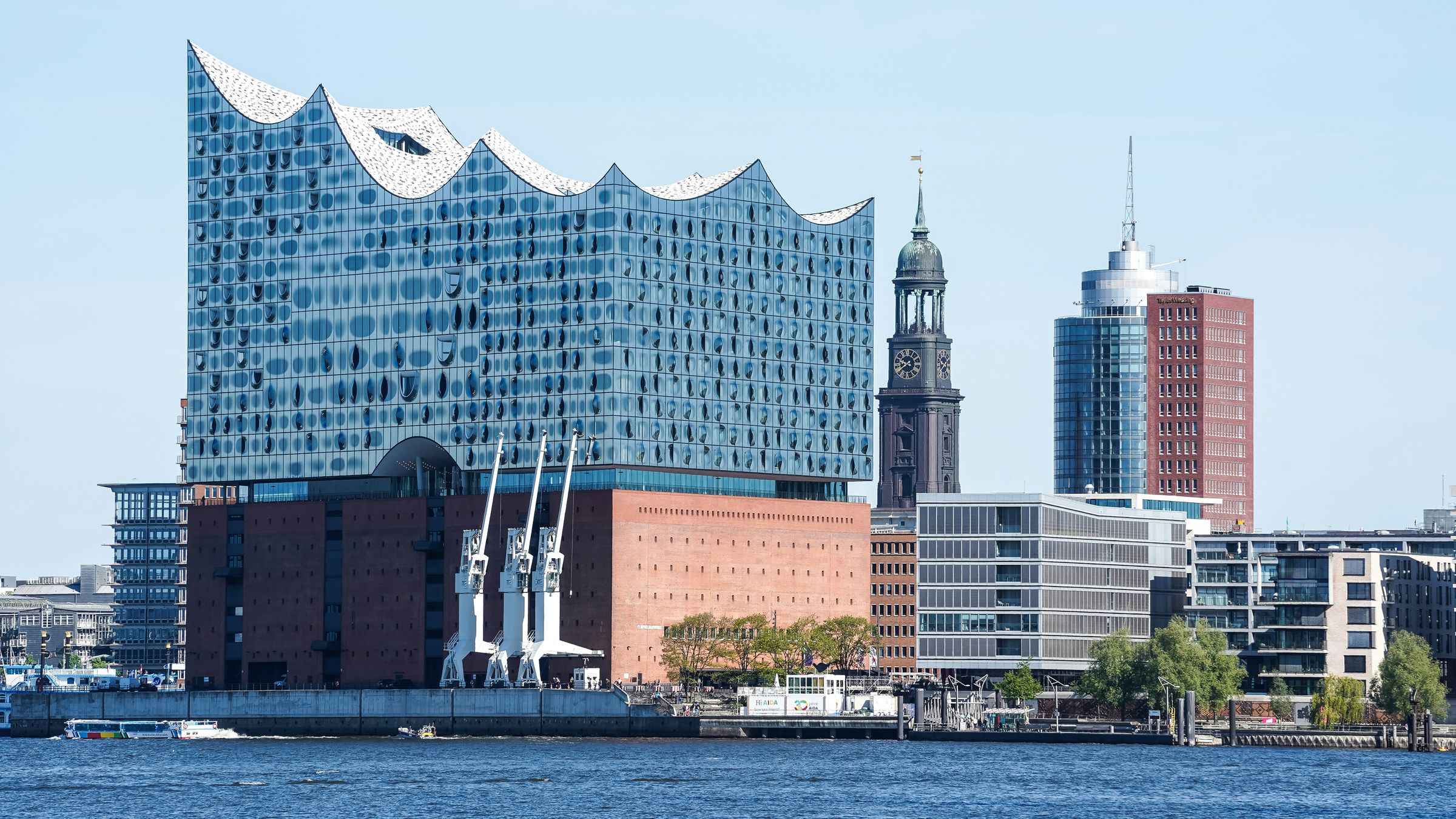
Ride along the curved elevator at the Elbphilharmonie up to the Plaza for panoramic views over the Elbe.
Marvel at the miniature version of the connected world at Miniatur Wunderland
Learn about Hamburg’s destruction during the Second World War and the memory of Operation Gomorrah at the St. Nikolai Memorial.
See how a former wartime defense tower transformed into a cultural venue at the Feldstrasse Bunker.
Restaurants and Bars
Enjoy modernized European and French-rooted bistro cuisine, as well as fresh North Sea-sourced mussels and regional ingredients, at Wohlers
Grab a burger at Dulf’s Burger, for the obvious joke!
Explore Hamburg’s music culture and the area where the Beatles developed their live performance style at Große Freiheit.
Visit the heart of Hamburg’s nightlife and historic red-light district, with bars, clubs, and a strong St. Pauli identity at Reeperbahn.
Shopping
Roam around Hamburg’s various flea markets on specific weekends of each month, such as FlohZinn and Langschläferflohmarkt.
Hit the Mönkebergstrasse Shopping Street or the Europa Passage, both downtown shopping areas.
How to get around
Hamburg’s public transit rail is a unified network that consists of four rapid transit subway lines (U1-U4) that connect the city center with outer neighborhoods as well as four suburban rail lines (S-Bahns) that connect commuter towns to Hamburg Hauptbahnhof. A standard Adult day pass for Hamburg’s HVV public transit network costs €8.20 for the central rings (1-2 rings / Hamburg AB).
Areas to Stay
Stay in the Old Town (Altstadt), New Town (Neustadt), or HafenCity to see the most attractions and key stops in Hamburg.
Before I visited it in person, I knew of Hamburg as the ‘bastion’ of globalization, being Germany’s largest port, home to sprawling complexes of historical warehouses, merchant houses, and ships that ultimately would sail to distant markets. Its reputation revolves around the theme of movement. What visiting Hamburg revealed, to me, is that the city does not overwhelm with the frenetic global energy I expected, but instead is more reserved and laid-back. Beneath the surface, though, Hamburg reveals itself as industrious, dynamic, and complex–only if you know where to look.
Hamburg, The Port
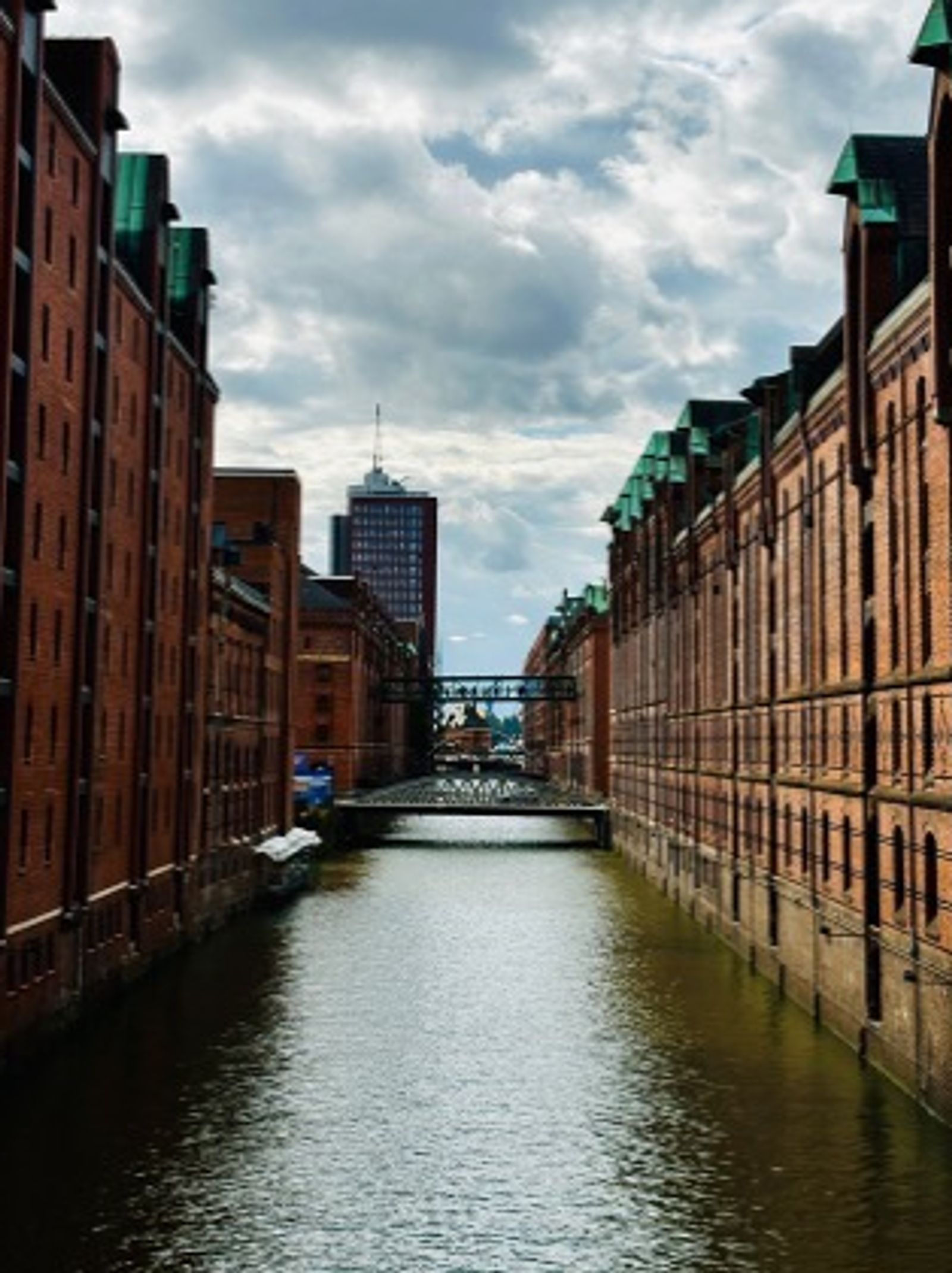
Start at the Speicherstadt, because few places make Hamburg’s history as a trading city more visible. Spanning roughly 26 hectares and built on thousands of timber foundation piles, the complex was designed for an earlier age of global trade, when coffee, spices, carpets, and other commodities moved through Hamburg in growing volumes. The district’s neo-Gothic red-brick warehouses rise along the canals, with each block positioned so goods could arrive by barge on one side and leave by street on the other. Today, its canals feel miniature beside the 20,000-container ships that drive modern commerce. However, its designation as a UNESCO World Heritage Site in 2015 preserves the Speicherstadt as a physical record of how global trade proliferated here, from Germany to the rest of the colonial world.
Also consider a harbor tour from the Landungsbrücken. The waterfront here is one of Hamburg’s liveliest public spaces, crowded with ferries, tour boats, and people lingering along the Elbe. But the real value you get from being on the water is a sense of perspective: from a boat, you pass close to container terminals and ships whose scale is difficult to grasp from shore.
Just up the river, one can see the contrast between Hamburg’s industrial infrastructure and its efforts to turn the harbor into a civic and cultural space. The Elbphilharmonie is inseparable from Hamburg’s port. It has a glass facade that sits on top of a former brick warehouse. According to the building architects, the facade is meant to resemble sea waves, drawing on the city’s maritime setting. Even without a concert ticket, you can enter for free and ride the 82-meter Tube–Europe’s longest curved escalator–to the Plaza and step out onto a viewing terrace with 360-degree views over the working waterfront below.
While you’re at the Speicherstadt complex, pay a visit to Miniatur Wunderland, which feels like a fitting homage to Hamburg itself. It is home to the world’s largest model railway and a functioning miniature airport. Its painstaking 1:87-scaled recreations span some of the world’s most recognizable landscapes, from the Grand Canyon to the South of France. The model reduces the machinery of movement to a scale that you can easily take in. Trains travel by rail from one city model to another, planes (and the occasional Death Star) take off and land on the model airport’s one runway, and model Formula One racecars glide through Monaco’s hairpins with ease. But Hamburg remains at the center: its ports, railways, and landmarks are meticulously recreated, turning this attraction into a reflection of what makes Hamburg such a global and connected city.
Hamburg, The Memorial
It is Hamburg’s identity as a port that made it a major target during the Second World War. Several sites in and around the city display the physical and historical scars of that period. At the St. Nikolai Memorial, the blackened ruins of the neo-Gothic destroyed church are preserved. The museum below the ruins exhibits the scale of the destruction that the city experienced during the war through photographs, personal accounts, and primary material on the July 1943 bombing campaign known as Operation Gomorrah. The Gothic tower, which houses the memorial, is one of the most striking structures in Hamburg’s skyline, a reminder of the city’s history in the war.
A few metro stops away, a very different wartime remnant stands in St. Pauli. The Feldstrasse Bunker, built around 1942-43 as a flak tower, was constructed with forced labor. It was used for both anti-aircraft defense as well as an air-raid shelter. Today, its concrete bulk supports a cultural complex and a rooftop park, making it one of the city’s clearest examples of how it has repurposed rather than erased its wartime architecture.
Hamburg, The Lifestyle
When in Hamburg, eat a hamburger! The connection is historical rather than as the name suggests, as the modern hamburger evolved from the “Hamburg steak” associated with German migrants. Indulge in the irony by following the local’s recommendation of Dulf’s Burger, particularly its location in Karolinenstraße, for the best burger in town.
If Hamburg’s global character can feel understated at first, then its lifestyle is where its dynamism emerges. Then, head to Große Freiheit, where Hamburg’s maritime history gives way to a lively music culture. The street is lined with clubs and bars, and at its entrance sits Beatles-Platz, marking the city’s role in the making of one of the greatest bands of all time. Between 1960 and 1962, the band played in nearby clubs–including the Indra Club, Kaiserkeller, and Star-Club. Hamburg was where the members accumulated enough stage experience that would help transform them into the internationally famous band we know today.
Beer is another part of Hamburg’s lifestyle that is connected to its trading past. Hamburg has over a thousand years of brewing history and was once a major beer exporter! Astra is inseparable from St. Pauli and the surrounding Reeperbahn–the city’s historic red-light district. The beer’s branding, brewery, and long relationship with FC St. Pauli deliberately drew on the neighborhood’s irreverent side. For instance, their high-alcohol seasonal beer is called Astra Arschkalt, meaning ‘Astra Ass-Cold,’ while the strong bock-style variety is called Astra Rotlicht, meaning ‘Astra Red-Light’. On the other hand, Holsten remains another of Hamburg’s defining traditional beer names, with a strong association with Hamburger SV. The beer became synonymous with the club as well as became an integral part of local matchday culture.
Lastly, end the night at Uebel & Gefährlich, inside the same Feldstrasse bunker that is witness to Hamburg’s wartime history. By night, its concrete interior becomes a live-music and club venue, with programs moving between electronic dance music, house, indie, and hip-hop. The atmosphere is distinctly German: dance-heavy, in-the-moment (often phones-free), and is built around the music set. Nights start late (think midnight), stretch well into the morning, and the crowd energy is palpable.
Hamburg ultimately is not a city of one identity. Its warehouses explain how the city has helped to enable globalization, its memorials expose the violence that forced Hamburg to rebuild and improve. Its music and nightlight culture will show how Hamburg–and the city’s youth–continue to reinvent themselves. Admittedly, in 48 hours, you will not fully understand the city. But if you know where to look, then the city will keep you coming back to explore more.